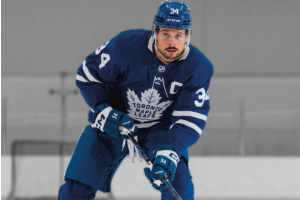
Hockey Neck Guards Explained: Rules, Fit, Safety, and Buying Guide


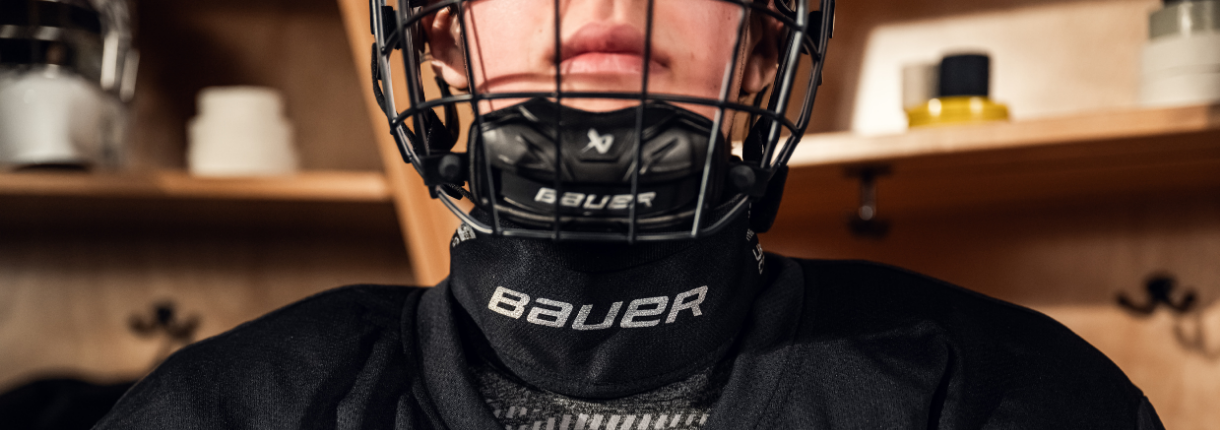
A hockey neck guard used to be something only a small group of players thought about before stepping on the ice. That's no longer the case.
The USA Hockey Congress approved legislation requiring neck laceration protection for players in all age classifications other than adults, in games and practices, as well as for on-ice officials under the age of 18, effective August 1, 2024. The AHL's Board of Governors unanimously decided to mandate cut-resistant neck protection for all players and on-ice officials, effective for the 2024-25 season. The IIHF followed. The conversation has reached every level of the game.
Whether you're a parent buying gear for a youth player, an adult rec player wondering if you need one, a goalie trying to figure out what actually counts, or a coach helping a team meet equipment rules — this guide covers everything you need to know.
Start here. Make the right call.
Quick Answer: Do Hockey Players Need a Neck Guard?
⚡ Quick Answer
Yes, many hockey players are now required to wear cut-resistant neck protection. USA Hockey requires neck laceration protectors for youth, girls, junior players, and officials under 18, while the AHL and IIHF also mandate them. Adult recreational and professional league requirements vary, so always check your league's current equipment rules.
| Player Type | Current Requirement |
|---|---|
| USA Hockey youth, girls & junior (under 18) | Required |
| USA Hockey 19-year-old boys, girls & junior players | Required |
| USA Hockey officials under 18 | Required |
| USA Hockey adult players | Not required • Strongly recommended |
| AHL players & officials | Required |
| IIHF tournaments | Required |
| NHL players | Voluntary |
| High school, junior & adult recreational leagues | Varies by league |
If your league requires neck protection, the next step is choosing a certified neck guard that fits properly and works with the rest of your equipment.
Why Neck Guards Became a Bigger Hockey Safety Topic
Adam Johnson, 29, was playing for the Nottingham Panthers of England's Elite Ice Hockey League when he suffered a fatal neck laceration from an opponent's skate blade during a Champions Cup game in October 2023.
The AHL joined the list of professional hockey leagues to set new standards for protective apparel following Johnson's death. Since then, the Western Hockey League mandated neck protectors for all its players, and the IIHF did the same for participants in its world championship and Olympic tournaments.
This wasn't a spontaneous reaction. USA Hockey had long recommended wearing a neck laceration protector that covers as much of the neck as possible along with cut-resistant socks, sleeves, and undergarments. The USA Hockey Safety and Protective Equipment Committee, at the request of the USA Hockey Board of Directors, started looking at potential rule modifications related to neck laceration protection in November 2023.
Hockey has seen this evolution before — helmets, full cages, visors, mouthguards, and cut-resistant socks all went through the same journey from "optional" to "standard." Neck protection is at that inflection point now.
"Life-threatening injuries can occur from a skate blade to the neck, as that area holds the vital arteries," says T. Sean Lynch, M.D., a sports medicine and orthopedic surgeon at Henry Ford Health. The anatomy is unforgiving. The neck is exposed, close to the ice surface, and difficult to cover with traditional padding.
Are Hockey Neck Guards Required?
The honest answer: it depends on where and how you play. Rules vary by league, age group, level of play, and even tournament. Here's a breakdown of what's current.
USA Hockey
Starting August 1, players competing in youth, girls, high school or junior hockey within USA Hockey are required to wear neck laceration protectors (NLPs) for all games and practices. In addition, on-ice officials under the age of 18 as well as players in all six disciplines within USA Hockey's disabled hockey program are also required to wear NLPs.
While players in the adult age classification are excluded from the requirement, USA Hockey continues to recommend neck laceration protectors for those playing adult hockey and remains steadfast in encouraging the use of cut-resistant socks, sleeves or undergarments for all players and on-ice officials.
One important enforcement note: the rule applies to both practices and games. The consequence for not wearing a neck guard is an initial team warning followed by a 10-minute misconduct penalty for any violations after the initial warning. A parent waiver cannot override it — a parent waiver cannot exempt a player from wearing neck protection.
The AHL
All AHL skaters, referees and linespersons, regardless of age or experience, are required to wear approved cut-resistant neck protection. The AHL's Board of Governors unanimously approved the mandatory use of cut-resistant neck protection by all of its players and on-ice officials, beginning with the 2024-25 season.
Cut-resistant socks and wrist sleeves were previously mandated for AHL players and officials beginning with the 2023-24 season. The direction is clear: broader cut-resistant protection across the body, not just the neck.
The IIHF
The International Ice Hockey Federation (IIHF) has made neck guards mandatory for all levels of its tournaments, including the Olympic Games and world championships for both men and women.
The NHL
While neck guards aren't required in the NHL, NHL Commissioner Gary Bettman has previously said the league cannot make neck guards mandatory on its own but could in conjunction with the NHL Players' Association. He stated, "Players are free to wear neck guards, and I would strongly encourage it."
While neck protection isn't mandated for the NHL, some sports medicine experts say it's likely coming — as the American Hockey League (just below the NHL) has mandated neck protection. "Sometimes at the higher level, creating new mandates occur at a slower pace," says Dr. Lynch. "It's not a matter of if, but when, neck guards will be mandated in the NHL."
High School, Junior, Adult Rec, and Local Leagues
Requirements here vary widely. State and local associations often exceed minimum national requirements. Many youth leagues in Minnesota, Massachusetts, and other traditional hockey markets had already mandated neck guards before national organizations acted, and some extend requirements to adult recreational leagues as well.
Bottom line: always check your specific league rulebook before buying. Don't assume one product satisfies every governing body's wording.
Hockey Neck Guard Rules by League
Note: Equipment requirements can change. Use this table as a starting point, then confirm the latest rules with your league or governing body before taking the ice.
| League / Level | Requirement | Who It Covers | Key Notes |
|---|---|---|---|
| USA Hockey (Youth, Girls & Junior) | Required | Players under 18, 19-year-old boys/girls/junior players, and on-ice officials under 18 | Required for all games and practices. Parent waivers are not permitted. |
| USA Hockey (Adult) | Strongly Recommended | Adult players | Not required under current USA Hockey rules. |
| AHL | Required | All players and on-ice officials | Approved cut-resistant protection required beginning with the 2024–25 season. |
| IIHF | Required | All players in IIHF-sanctioned events | Includes World Championships and Olympic competition. |
| NHL | Voluntary | All NHL players | No league-wide requirement as of 2026. |
| WHL | Required | All players | Mandated following the 2023–24 safety updates. |
| High School Hockey | Varies | Players by state or federation | Check your state or school association rules. |
| Junior Hockey | Varies | Players by league | Review your league's equipment regulations. |
| Adult Recreational / Beer League | Varies | Adult players | Requirements are determined by the local league or rink. |
| Local Tournaments | Varies | Players and, in some cases, officials | Always verify equipment requirements before tournament play. |
What Certifications Should You Look For?
Not every neck guard labeled "cut-resistant" is equal. Certifications tell you a product has been independently tested against a real standard.
The Hockey Equipment Certification Council (HECC) is the independent organization responsible for certifying hockey equipment used in USA Hockey sanctioned play. In 2025, HECC launched a new certification program specifically for neck laceration protectors to raise safety standards across the sport. Products must now pass testing under ISO 10256-5, an international safety standard for hockey protective equipment.
Beginning in 2025, consumers should look for neck laceration protectors with a HECC certification logo to indicate the product meets minimum performance standards. The goal of this program is to provide consumers with confidence in the performance of specific neck laceration protection products. A HECC logo on certified hockey products is a visual confirmation that a sample of that product has been evaluated by the HECC Validator and found to meet predetermined performance specifications.
Other certifications you'll see on product labels:
- BNQ (Bureau de normalisation du Québec) — Required for Hockey Canada players and broadly recognized in USA Hockey compliance
- CE (Conformité Européenne) — European standard; commonly found on quality cut-resistant gear
- ASTM F3145-22 — An American standard referenced in some USA Hockey compliance contexts
Two neck guards can both meet the USA Hockey compliance requirement while offering very different levels of protection. That's because certification standards establish a minimum safety threshold, not the highest level of protection available.
Look for ANSI cut resistance levels of A6 or higher, with A8–A9 representing elite protection. The higher the rating, the more resistant the material is to a blade cutting through it.
What a Hockey Neck Guard Does (and Doesn't Do)
What It Does
A hockey neck guard is designed to help reduce the risk of lacerations to the neck area — primarily from skate-blade contact, but also from sticks, pucks, and other impacts. A skate blade to the neck could sever vital arteries such as the jugular or carotid, which can lead to life-threatening injuries.
Depending on the design, a neck guard may use:
- Cut-resistant fabrics (Kevlar, ballistic nylon, aramid fibers)
- Padded or molded components for impact absorption
- Extended bib coverage for lower-neck and collarbone area
- An integrated base-layer construction to prevent shifting
The thickness of the neck guard doesn't necessarily matter, says Dr. Lynch, as long as it's made of a durable fabric like cut-resistant Kevlar. (Kevlar is actually a fabric that's used in bulletproof vests.)
What It Doesn't Do
No piece of equipment is a guarantee. A neck guard:
- Does not make hockey risk-free or eliminate all possible injuries
- Does not automatically satisfy every league rule just because it says "neck guard" on the packaging
- Does not replace a properly fitted helmet, cage, shoulder pads, or goalie equipment
- Does not work correctly if it's modified, cut, stretched, or worn incorrectly
- Does not count as goalie impact protection on its own
- Does not protect you if it shifts out of position during play
Think of neck protection as meaningful risk reduction — not an on/off switch for safety.
Types of Hockey Neck Protection
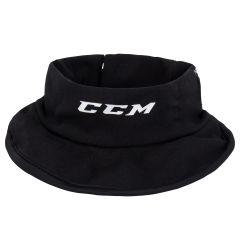
Standalone Collar / Wrap-Around Neck Guard
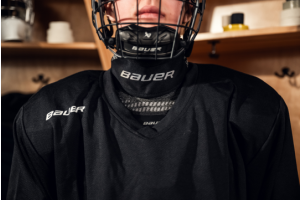
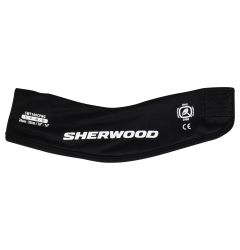
The most common and widely available option. A cut-resistant collar that fastens around the neck — usually via a Velcro strap at the back.
Why players choose it: Simple to add to any gear setup. Easy to pack, wash, and replace separately. Works for both skaters and goalies depending on the specific model.
Watch out for: Fit consistency. If the collar is too loose, it can shift or slide down during play. Always test closure security with shoulder pads on.
Best for: Players who want a simple, rule-compliant neck guard that works with their current gear.
Bib-Style Neck Guard
A neck guard with extended coverage below the collar line — reaching toward the upper chest, clavicle area, or sternum depending on the design.
Bib-style guards are often preferred for goalies, as this style adds extra protection around the chest and back, along with the neck. Skaters use them too when they want more comprehensive lower-neck coverage.
Why players choose it: Reduces exposed gaps between the neck guard, shoulder pads, and upper chest. Particularly useful in net-front or physical play situations.
Watch out for: Can feel warmer or slightly more restrictive than a low-profile collar. Test it in a full game or practice before committing.
Best for: Goalies and players who want extended lower-neck and upper-chest coverage.
Cut-Resistant Base Layer With Integrated Neck Guard
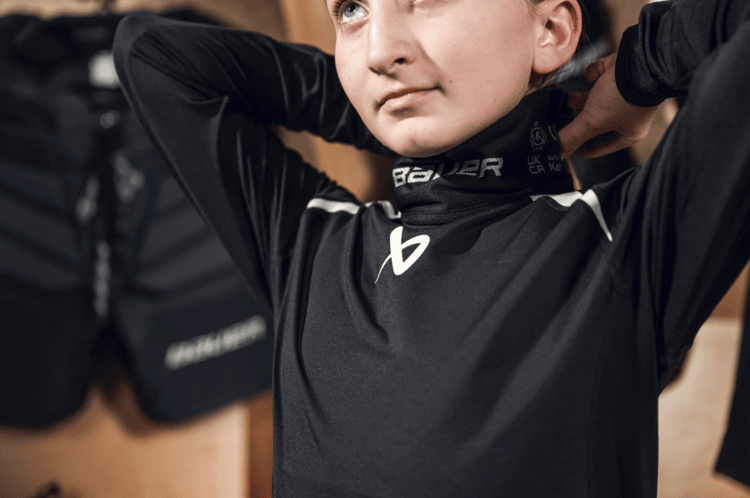
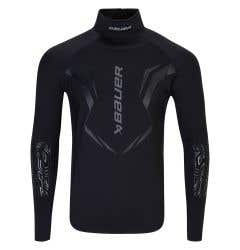
A compression or performance base-layer shirt with cut-resistant fabric built into the collar or neck area. Cut-resistant base layers with integrated neck protection are increasingly popular and may be more comfortable than traditional collar-style guards.
Why players choose it: The neck protection can't be forgotten because it's attached to the shirt. Stays in position better for many players. Often includes wrist-area cut resistance as well.
Some shirts offer cut-resistant protection to both the neck and wrist, providing coverage for recreational to elite-level hockey.
Watch out for: Needs to be washed and dried properly after every use. If you skate multiple times per week, you'll want more than one shirt.
Best for: Players who dislike separate collars, tend to forget small gear pieces, or want neck and wrist protection in a single garment.
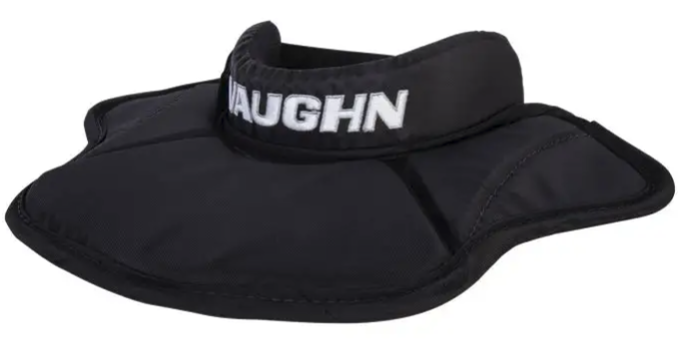
Designed specifically around a goalie's stance, equipment profile, and the unique exposure points of that position. The Bauer PRO Goalie Neck Guard, for example, features cut-resistant fabric in the neck and added impact protection across the clavicle area. It's designed to be easy to take on and off and fits under existing chest protectors while remaining comfortable and non-intrusive.
Best for: Goalies who need protection that works with a mask, chest protector, and wide butterfly stance.
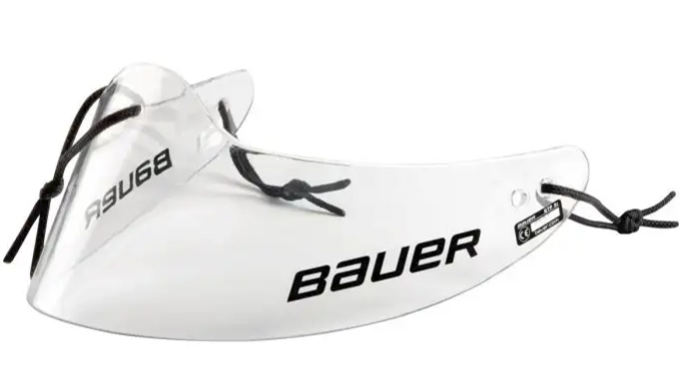
A clear or tinted plastic attachment that hangs from the goalie mask. Its primary purpose is puck-impact protection below the mask — not cut resistance.
Critical point: a goalie neck guard offers the necessary protection from skate blades, while a throat/dangler guard helps shield against hard shots. These are different jobs. A dangler alone does not satisfy a neck laceration protection rule.
Best for: Goalies who want additional impact coverage below the mask chin bar — used in addition to a cut-resistant neck guard, not instead of one.
Neck Guard Type Comparison
| Type | Best For | Cut Resistance | Impact Protection | Fit Stability | League Compliance |
|---|---|---|---|---|---|
| Standalone Collar | All skaters | ✅ Yes (if certified) | Limited | Good with proper fit | Verify certification |
| Bib-Style Neck Guard | Skaters & goalies | ✅ Yes (if certified) | Some models | Excellent | Verify certification |
| Integrated Base Layer | Players wanting an all-in-one option | ✅ Yes (if certified) | Limited | Excellent | Confirm the integrated collar meets league rules |
| Goalie Neck Guard | Goalies | ✅ Yes (if certified) | Some models | Good under chest protector | Verify certification |
| Goalie Dangler | Goalies | ❌ No | ✅ Yes | Attached to mask | Does not satisfy neck laceration protection requirements |
| Cut-Resistant Base Layer (No Collar) | Players wanting wrist or arm protection | Varies | Limited | N/A for neck protection | Not considered neck protection unless an approved collar is included |
Top Neck Guard Picks at HockeyMonkey
Browse the full selection of hockey neck guards and cut-resistant neck protection at HockeyMonkey. Here are categories to look for:
Bauer BodyGuard Senior Neck Collar Bib
$39.99
CCM Pro Cut Resistant Bibbed Hockey Neck Guard
$44.99
Bauer BodyGuard Neck Protect Senior Long Sleeve Shirt
$109.99
CCM 900 Cut Resistant Hockey Neck Guard
$34.99
For the full range of cut-resistant neck protection including base layers and specialty goalie options, visit HockeyMonkey.
How to Choose the Right Hockey Neck Guard
Picking a neck guard isn't just "grab the cheapest one that fits." Here's a step-by-step process that actually works.
Step 1: Confirm Your League's Exact Rule
Before you compare products, check the rule wording. Your league may require:
- "Neck laceration protection" (USA Hockey language)
- "Approved cut-resistant neck protection" (AHL language)
- A specific certification standard (BNQ, HECC, ASTM, CE)
- That the protector be "commercially designed and manufactured for that purpose"
- Compliance for both games and practices
- Different coverage for goalies vs. skaters
If your rule mentions an approved list or required certification mark, check the product label before buying.
Step 2: Choose the Right Style for the Player
There's no universal best choice. A quick guide:
- Hate managing extra gear pieces? → Integrated base layer shirt
- Want the simplest solution? → Standalone collar
- Want more lower-neck coverage? → Bib-style
- Playing in net? → Goalie-specific neck guard, not a skater collar
Step 3: Size It Correctly
Measure neck circumference using a soft tape measure wrapped around the neck just below the Adam's apple. Leave enough room for comfort.
Start by measuring the neck with a tape measure, shoelace, string, or anything convenient. If you're under 14 inches, you'll fit into a junior or youth neck guard. Anything above 14 inches is an adult-sized neck protector.
Always cross-reference with the manufacturer's specific size chart — sizing can vary meaningfully between brands.
Step 4: Check Coverage With Full Gear On
The neck guard should be snug without being too constrictive, allowing full range of motion and without any gaps. Just as you would walk around in shoes before buying a pair, move your head from side to side and up and down to make sure your neck guard fits properly.
Check for gaps after adding shoulder pads, a helmet, and a jersey. What looks fine in a mirror can shift significantly during play.
Step 5: Prioritize Comfort (Because Players Who Hate It Won't Wear It)
Players are far more likely to wear protective gear properly if it feels natural during gameplay. A technically excellent neck guard that sits in the bag every game isn't protecting anyone.
If a player complains about heat or bulk, compare styles before giving up on neck protection entirely.
Step 6: Buy a Backup
For youth players and tournament weekends especially: keep a backup neck guard in the bag. Equipment checks happen. Gear gets lost. A spare prevents sitting out ice time over something that costs less than a meal.
How Should a Hockey Neck Guard Fit?
A hockey neck guard should fit snugly against your neck without restricting breathing or head movement. It should fully cover the front and sides of your neck, stay securely in place during play, and leave no large gaps between your neck guard, shoulder pads, and helmet.
Use this quick checklist before every season or whenever you purchase a new neck guard.
| Fit Check | What You're Looking For |
|---|---|
| Neck Coverage | Covers the front and sides of the neck with no major exposed gaps. |
| Secure Fit | Stays in place without rolling, sliding, or twisting during movement. |
| Head Movement | You can comfortably turn your head and look up or down without restriction. |
| Shoulder Pad Coverage | No exposed gaps appear between the neck guard and shoulder pads while wearing full equipment. |
| Comfort | Breathing, swallowing, and speaking feel natural throughout use. |
| Closure | Velcro, buckle, or fastening system stays securely closed during skating and contact. |
| Game Ready | The player has worn the neck guard through at least one full practice before using it in a game or tournament. |
For youth players: Avoid introducing a new neck guard on tournament or game day. Wearing it during a few practices first helps players get comfortable and gives you time to identify any fit or coverage issues.
Parent Checklist Before Buying a Youth Hockey Neck Guard
Parents carry extra responsibility here — your child needs something that meets the rule and that they'll actually wear through a full practice.
Before buying, confirm:
- Your child's league/association's exact neck guard requirement
- Whether it applies to games, practices, and tournaments
- Whether a specific certification or approval marking is required
- You've used the manufacturer's size chart (not just guessed "medium")
- Your child has tried it on with full gear — shoulder pads, helmet, jersey
- There are no major exposed gaps at the throat or collarbone
- Your child can turn their head fully in both directions
- Your child has practiced in it before game day
- It's labeled with your child's name
- You have a backup in the bag
- You know the signs of when to replace it (fraying, cuts, stretching, lost closure)
What If My Player Hates Wearing a Neck Guard?
It's one of the most common concerns parents have. In most cases, resistance comes down to fit, comfort, or simply getting used to wearing something new—not because the player can never adapt. Here's how to solve the most common issues.
| Problem | Recommended Solution |
|---|---|
| Feels too tight | Double-check sizing and consider a larger size or a model with an adjustable closure. |
| Keeps sliding down | Try an integrated base-layer shirt or a neck guard with a more secure closure system. |
| Feels too bulky | Switch to a lower-profile collar-style neck guard. |
| Interferes with shoulder pads | Compare bib-style and collar-style models while wearing full equipment. |
| Feels too hot or uncomfortable | Look for moisture-wicking materials. Most players become comfortable after a few practices. |
| Player forgets to wear it | Choose an integrated base-layer shirt with built-in neck protection so it becomes part of getting dressed. |
| Feels distracting during games | Have the player wear it through at least 3–5 full practices before using it in competition. |
Most players notice a new neck guard during their first few skates, but that feeling typically fades as they become accustomed to it. Giving players a few practices to adjust before a game or tournament makes the transition much easier.
Goalie Neck Protection: What Goalies Need to Know
Goalies have a different setup and different exposure patterns than skaters. The neck protection conversation is not one-size-fits-all when you're in the crease.
What Goalies Should Consider Wearing
- A cut-resistant neck guard for laceration protection
- A goalie-specific padded collar or bib for impact coverage at the clavicle and collarbone area
- A clear plastic dangler hanging from the mask for below-chin puck-impact protection
- Possibly a chest protector with extended upper coverage depending on the design
These pieces do different jobs. The neck guard offers the necessary protection from skate blades, while the throat guard helps shield against hard shots. A dangler does not satisfy a neck laceration protection rule on its own.
Goalie Neck Guard vs. Dangler: What's the Difference?
| Feature | Cut-Resistant Neck Guard | Goalie Dangler |
|---|---|---|
| Primary Protection | Helps reduce the risk of skate blade lacerations. | Protects against puck impacts below the mask. |
| Material | Cut-resistant fabrics such as Kevlar®, ballistic nylon, or aramid fibers. | Polycarbonate plastic, sometimes paired with foam. |
| League Compliance | Yes, when the model meets your league's certification requirements. | No. A dangler alone does not satisfy neck laceration protection rules. |
| How It's Worn | Around the neck beneath the chest protector. | Suspended from the bottom of the goalie mask. |
| Should They Be Used Together? | Yes. Works alongside a goalie dangler for complete protection. | Yes. Best used in combination with a certified neck guard. |
Goalie Fit Check
Test the full setup — mask, chest protector, jersey, dangler — together. Confirm:
- Can track the puck across the crease without restriction
- Can look down without pressure or pinching
- Can rotate head left and right in stance
- Can drop into butterfly without the guard bunching or shifting
- No exposed gap between mask, neck guard, and chest protector
- Comfortable through a full practice
How to Care for and Replace a Hockey Neck Guard
A neck guard sits against your skin every session. Treat it accordingly.
Care basics:
- Follow the manufacturer's washing instructions — don't guess
- Let it dry fully between uses — never pack it damp
- Don't cut, trim, or modify the protective area
- Store it flat or hanging, not balled up at the bottom of a wet bag
Replace it when:
- It's been cut or punctured
- Fabric is fraying or separating
- It's stretched out and no longer stays in position
- The closure no longer holds securely
- The protective area is visibly damaged or compressed
- The player has outgrown it
Regular wear and growth spurts can alter the fit, making replacements necessary to ensure safety. Don't assume a neck guard that fit perfectly last season is still doing its job this season.
For integrated shirts, consider keeping two on rotation if the player skates three or more times per week. A dry, clean backup is always better than reusing damp gear.
Common Mistakes When Buying a Hockey Neck Guard
Avoid these before your next purchase:
Assuming every neck guard satisfies every rule
Language matters. "Neck guard" doesn't automatically mean "neck laceration protector" in every rulebook. Check the product certification and the rule wording.
Buying only on price
The cheapest option isn't automatically compliant or effective. Fit, coverage, and certification matter more than saving $10.
Skipping the fit test with full gear on
A neck guard that feels fine in a store can fit completely differently once shoulder pads, a jersey, and a helmet are added.
Assuming a dangler is the same as neck laceration protection
This is a common goalie mistake. They serve entirely different purposes.
Waiting until game day to introduce it
Youth players especially need adjustment time. First-time neck guard wearers should practice in it before a high-stakes game or tournament.
Continuing to use damaged or stretched-out protection
A cut or frayed neck guard that no longer holds its position isn't providing the coverage it should.
FAQs About Hockey Neck Guards
Are hockey neck guards required?
Starting August 1, 2024, players competing in youth, girls, high school, or junior hockey within USA Hockey are required to wear neck laceration protectors for all games and practices. The AHL and IIHF also require them. Requirements at the adult rec, beer league, and local tournament level vary — always check your specific rulebook.
What is the penalty for not wearing a neck guard in USA Hockey?
Rule enforcement is the same as any other equipment violation: an initial team warning followed by a 10-minute misconduct penalty for any violations after the initial warning.
Do adult hockey players need neck guards?
USA Hockey doesn't mandate them for adult players, but strongly recommends them. Your adult league may have its own rule. Either way, the medical case for wearing one doesn't change based on age.
Does a goalie dangler count as a neck guard?
No. A dangler is impact protection below the mask — primarily designed to stop pucks, not blade contact. Goalies should wear a certified cut-resistant neck guard in addition to a dangler, and should confirm their complete setup satisfies their league's specific rule.
What type of hockey neck guard is best?
The best neck guard is the one that: meets your league's certification requirement, covers your neck without exposed gaps, stays in place during movement, works with your gear setup, and is comfortable enough to wear consistently every session.
What cut-resistant materials should I look for?
Opt for high-quality cut-resistant materials such as Kevlar, ballistic nylon, or advanced foams. These materials offer durability while ensuring comfort and breathability. For certification purposes, the HECC and BNQ logos on the product label tell you it's been tested to a real standard.
Can a neck guard prevent all neck injuries?
No. A neck guard is designed to help reduce the risk of laceration injuries — it is not a guarantee of safety. It needs to fit correctly, stay in place, and meet your league's standard to do its intended job.
How tight should a hockey neck guard be?
It should be snug without being too constrictive, allowing full range of motion — but without any gaps in the neck. If you can easily slip more than one or two fingers underneath it, it's probably too loose.
Should youth players practice in a neck guard before wearing it in a game?
Yes, always. Give your child at least two or three practice sessions in the neck guard before using it in a competitive game or tournament. This gives them time to adjust naturally and gives you a chance to catch any fit or coverage problems early.
How often should you replace a hockey neck guard?
Replace it any time it shows signs of cuts, fraying, stretching, or damage to the protective area — or whenever the closure no longer holds securely. Also replace it when a youth player outgrows it. When in doubt, replace it.
Final Takeaway
Hockey neck guards explained, start to finish: this is a piece of protective equipment that now matters at every level — from mites to the AHL, from youth travel hockey to international competition.
Choose a neck laceration protector that covers as much of the exposed neck area as possible and is worn properly without alteration. That simple guidance from USA Hockey covers the essentials.
Start with your league's rule. Check the certification. Get the right size. Test it with full gear. Let the player adjust. Keep a backup in the bag.
If you're shopping for a youth player, an adult, or a goalie, the full selection of hockey neck guards and cut-resistant neck protection at HockeyMonkey has certified options across every style, size, and price point. Need cut-resistant protection beyond the neck? The cut-resistant neck protection collection includes base layers, integrated shirts, and goalie-specific options.
Protect the neck. Wear it every time. That's the whole game plan.
HockeyMonkey is the go-to hockey gear destination for players at every level — from first-time mites to adult beer leaguers to elite travel programs. Shop neck protection, hockey protective gear, and everything else you need at hockeymonkey.com.