Hockey Helmet Certification Guide: HECC, Expiration Dates, Fit, and When to Replace a Helmet


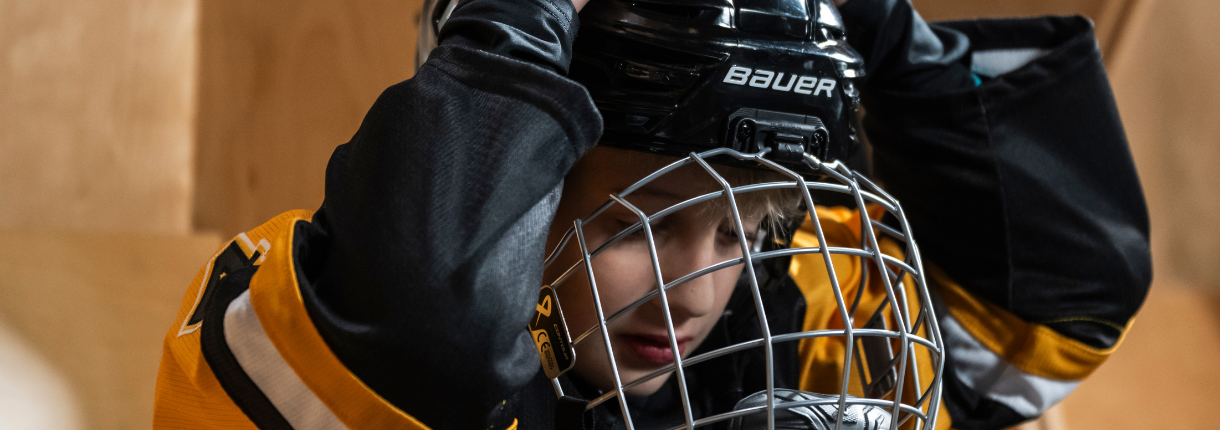
How do you know if a hockey helmet is still usable? It's the question every parent faces at the start of a new season — and the answer is almost never as simple as "it looks fine." A helmet needs to be certified, in-date, properly fitted, undamaged, and paired with compatible face protection before it belongs on anyone's head. Miss one of those, and you've got a problem.
This guide walks you through every check that matters: what the HECC sticker actually tells you, how to read the expiration date, what happens when the sticker is missing, how fit and condition factor in, and exactly when to pull the trigger on a replacement.
⚡ Quick Answer
A hockey helmet is still usable if the HECC sticker is present, readable, and not expired; the shell and liner are undamaged; the helmet fits the player correctly; all hardware is intact; and the face protection is certified as compatible. If any one of those fails, it's time to replace the helmet. The sticker alone isn't enough.
How Do You Know if a Hockey Helmet Is Still Usable?
A hockey helmet should be current, certified for your league, properly fitted, undamaged, and paired with compatible face protection. If one of those pieces is missing, the helmet may not be accepted for play—and more importantly, it may not protect the way it's supposed to.
Start with these nine checks:
| What to Check | Why It Matters |
|---|---|
| HECC sticker present | Many leagues require certified equipment to participate. |
| Expiration date current | HECC certification expires 6.5 years after manufacture. |
| Sticker readable | A removed or unreadable label voids certification. |
| Helmet fits correctly | A certified helmet that shifts or rocks isn't providing proper protection. |
| Shell undamaged | Cracks, dents, or structural damage mean the helmet should be replaced immediately. |
| Liner intact | Compressed, loose, or cracked padding reduces impact protection. |
| Chinstrap and hardware secure | The helmet must remain securely in place during play. |
| Face protection compatible | Your cage, visor, or shield must be certified for use with that helmet model. |
| League rules reviewed | Certification requirements can vary by age group, league, and governing body. |
A helmet may need to be replaced before its HECC certification expires if it's damaged, no longer fits properly, has been modified, or is paired with incompatible face protection.
The 30-Second Hockey Helmet Check
Run through this table before every new season, tournament, tryout, or equipment inspection. It covers the most common situations parents and players face.
| Helmet Situation | What to Do | Why |
|---|---|---|
| HECC sticker is current and readable, helmet fits, no visible damage | Continue using if your league accepts it. | Passes basic certification, fit, and condition checks. |
| HECC sticker is expired | Replace the helmet for leagues requiring current HECC certification. | Officials may reject expired equipment. |
| HECC sticker is missing, removed, or unreadable | Replace the helmet or confirm acceptability with your league. | A missing or removed label voids HECC certification. |
| Shell is cracked or visibly damaged | Replace the helmet immediately. | Structural damage is a hard stop for player safety. |
| Liner is loose, compressed, cracked, or deteriorating | Replace the helmet. | Liner condition directly affects impact protection and fit. |
| Chinstrap, screws, clips, or cage hardware are broken | Replace the damaged parts with manufacturer-approved hardware or replace the helmet. | The retention system must remain fully intact. |
| Helmet no longer fits the player | Replace the helmet. | Youth players often outgrow a helmet before its certification expires. |
| Cage, visor, or shield is not compatible with the helmet | Do not use that combination. | Incompatible face protection creates safety and compliance concerns. |
| Helmet was drilled, cut, painted, or modified | Verify with the manufacturer and your league before using it. | Modifications can void certification and compromise protection. |
| Used helmet with unknown history | Use caution and strongly consider replacing it. | Previous impacts or hidden damage may not be visible. |
When in doubt, check the manufacturer's instructions, confirm your league's equipment requirements, or replace the helmet. Player safety is always worth the investment.
What Does HECC Certification Mean on a Hockey Helmet?
The Hockey Equipment Certification Council's (HECC) mission is to seek out, evaluate, and select standards and testing procedures for hockey equipment. When a helmet carries a HECC sticker, it means the equipment met those applicable performance standards at the time of manufacture.
In the United States, hockey helmets are certified based on performance standards created by ASTM—the American Society for Testing and Materials. HECC is the organization that certifies qualifying products and provides the stickers manufacturers attach to approved helmets.
Here's what certification does—and does not—tell you:
| Factor | What It Answers |
|---|---|
| Certification | Did the helmet meet applicable equipment performance standards when it was manufactured? |
| Expiration date | Is the certification still valid for leagues that require current HECC approval? |
| Fit | Does the helmet fit this player's head correctly and securely? |
| Condition | Is the helmet free of cracks, worn padding, missing hardware, or other damage? |
| Compatibility | Is the cage, visor, or shield approved to be used with this helmet model? |
| League rules | Will officials allow the helmet to be used for your age group and level of play? |
No hockey helmet can prevent every head injury or concussion. HECC certification simply confirms that the helmet met established safety standards at the time of manufacture. Proper fit, condition, compatible face protection, and correct use remain essential for maximizing player safety.
How to Read the HECC Sticker and Expiration Date
Look on the back of your helmet for the HECC sticker — it's a white sticker with red, blue, and black text. The HECC sticker will show an expiry date reading "Valid Until End of Month Year."
The expiration date on the label is 6.5 years after the date of manufacture. Also on the outside rear of helmets are CSA labels with the year of manufacture on them. Manufacturers also provide a date of assembly or manufacture inside the helmet.
Step-by-step check:
- Find the HECC certification sticker on the rear of the helmet
- Read the expiration date — confirm it hasn't passed
- Make sure the sticker is fully legible (not scraped, faded, or peeling)
- Check the CSA label on the rear and manufacturer date inside if needed
- Confirm whether your specific league requires current HECC certification
- Do not remove, cover, damage, or alter the label — ever
The expiration date is important, but it's not the only check. A helmet can need replacement before that date arrives if it's been damaged, outgrown, modified, or paired with incompatible face protection.
What If the HECC Sticker Is Missing, Removed, or Unreadable?
This is the one that catches most families off guard — especially with hand-me-down helmets or gear pulled from the garage after a summer gap.
If the HECC label is removed, totally illegible, or missing, the helmet is no longer HECC certified. HECC cannot replace these labels.
There is a limited exception, but it applies only if the helmet does not appear damaged and only in the instance where the expiration date on the HECC label is illegible — not if the label is removed, totally illegible, or missing.
In that narrow exception case, league officials may allow the player to use the helmet if the manufacturing date on the CSA label or inside the helmet is less than 7 years from the date of play or inspection. If neither the CSA sticker date nor the manufacturer's date inside the helmet is legible, then the helmet is no longer HECC certified.
The practical bottom line: If your league requires HECC certification and the sticker is gone, scraped off, or completely unreadable — replace the helmet. There is no workaround, and no replacement sticker available. Don't put a player on the ice hoping officials won't check.
Is a Hockey Helmet Good for 6.5 Years?
Not automatically. The purpose of the expiration date is to acknowledge that time and use may have an effect on the protective qualities of the helmet. HECC established the 6.5-year lifespan of certification to coincide with the length of time the helmet maintains its necessary protective qualities.
That's the maximum window under ideal conditions — not a blanket guarantee.
The materials used in hockey helmets — typically high-density polyethylene for the shell and foam for the liner — break down over time. Exposure to UV light, temperature fluctuations, and general aging cause the plastic shell to lose elasticity. A helmet that's been repeatedly left in a freezing car trunk, or that's taken significant impacts, may need replacement well before year 6.5.
Replace sooner if any of the following apply:
- Shell is cracked or visibly stressed
- The helmet has absorbed a significant impact
- Liner is loose, compressed, cracked, or deteriorating
- Chinstrap or hardware is broken
- The player has outgrown the helmet
- The certification label is missing, removed, or unreadable
- The helmet has been drilled, cut, painted, or otherwise modified
- The manufacturer recommends replacement
- League officials will not accept it
Think of the expiration date as a certification deadline, not a condition guarantee.
Who Needs a HECC-Certified Hockey Helmet?
Requirements vary by league, country, school, tournament, and level of play. Always confirm with your specific rulebook — but here's the general framework:
Any player playing in a USA Hockey sanctioned event or league up to the age of 21 — from Mites through Juniors — or any player in a high school event played under Federation of High School playing rules, must wear a HECC-certified helmet and a HECC-certified facemask, or a HECC-certified goaltender helmet and facemask.
Players participating in an NCAA sanctioned event must wear a HECC-certified facemask with a hockey helmet, or a HECC-certified goaltender helmet and facemask.
Players in other leagues should review the rulebook for their particular league to determine whether HECC-certified helmets are required.
Adult rec and beer league players aren't always under strict USA Hockey enforcement — but that doesn't mean certification, fit, and condition stop mattering. It just means you need to check your league's specific rules before assuming anything is allowed.
Certification vs. Fit vs. Condition: What Actually Matters?
All of it. A hockey helmet isn't acceptable just because one box is checked. Here's how all the pieces interact:
| Factor | What It Means | Why It Matters |
|---|---|---|
| Certification | The helmet met applicable performance standards when it was manufactured. | Many leagues require certified equipment for participation. |
| Expiration date | The HECC certification is still within its valid certification period. | Expired equipment may not be accepted during inspections or league play. |
| Sticker condition | The HECC label is present, readable, and securely attached. | Missing or unreadable labels can void HECC certification. |
| Fit | The helmet fits snugly, sits level, and stays secure during movement. | Poor fit can reduce the helmet's intended level of protection. |
| Shell condition | The outer shell has no cracks, dents, or structural damage. | Structural damage is an immediate reason to replace the helmet. |
| Liner condition | The interior padding is secure and free from compression or deterioration. | The liner is essential for proper fit and impact absorption. |
| Chinstrap and hardware | All straps, screws, clips, and attachment points are intact and functioning properly. | The helmet and face protection must remain securely fastened during play. |
| Face protection compatibility | The cage, visor, or shield is approved for use with that specific helmet model. | Mismatched components can create safety and compliance issues. |
| League acceptance | The helmet complies with your league's equipment rules. | Officials can remove players using non-compliant equipment. |
A valid HECC sticker doesn't make a cracked helmet safe. A perfect fit doesn't override an expired certification, and a new cage won't help if it isn't compatible with the helmet. Every factor works together to provide the protection and compliance you need.
Hockey Helmet Fit Basics
Certification is the compliance check. Fit is the protection check. A helmet can be fully certified and still let you down if it's sitting wrong on the player's head.
A properly fitted hockey helmet should:
- Sit level on the head — not tilted back
- Rest approximately one finger above the eyebrows
- Feel snug without painful pressure points
- Not rock forward, backward, or side to side when the player shakes their head
- Keep the chinstrap secure with about one finger's width of space
- Hold the chin cup correctly if using a cage
- Allow clear vision with no obstruction from the brim
- Work comfortably with the rest of the player's gear
For youth players, check fit regularly throughout the season. A child can outgrow a helmet before the HECC sticker expires — if it's sitting too high, creating pressure points, or can't be adjusted correctly, it's time to replace it.
For a full step-by-step measuring and sizing guide, use the HockeyMonkey hockey helmet sizing chart before buying.
Helmet and Cage Compatibility: Why It Matters
A hockey helmet and face protector need to be certified as compatible — not just attached. Not every cage, visor, or shield fits every helmet correctly, and forcing the wrong hardware doesn't just create a safety issue; it can void the helmet's certification.
Compatibility matters because the helmet and face protection work together as a system. The cage or visor needs to:
- Fit the helmet shell geometry
- Use the correct manufacturer hardware (screws, clips, J-clips)
- Provide the intended coverage and protection
- Follow manufacturer attachment instructions exactly
Before combining a helmet and face protector, verify:
- Helmet brand, model, and size
- Cage, visor, or shield model
- Manufacturer compatibility documentation
- Required hardware type
- Whether the face protector is listed as certified for that helmet
- Your league's face protection rules
Avoid drilling new holes, bending parts to force a fit, or using random hardware from another helmet. The plastic in helmets breaks down most at the screw points — which is why, if you wear a visor or cage, you should be especially attentive to hardware condition. Helmets can and do break at visor screws.
Cage vs. Visor vs. Full Shield: What Certification Changes
Face protection is not one-size-fits-all, and the type you choose has real consequences for protection level, league acceptance, and certification category.
Full Cage
A full cage covers the entire face and is the standard for youth, high school, college, and most amateur hockey. It protects areas a visor never will — mouth, teeth, lower face, and jaw. For youth players especially, a full cage or full-face protection is the default requirement at most levels. Confirm your league's rules before considering any move away from full-face protection.
Full Shield or Hybrid Shield
Full shields and hybrid shields can provide full-face coverage depending on the design. Some players prefer them for visibility; others prefer cage for airflow and durability. As with cages, shields must be compatible with the helmet and accepted by the league.
Visor
A visor is not the same as a cage. It provides significantly less protection — covering only part of the eye area and offering nothing for the mouth, teeth, lower face, or jaw. Visor use depends heavily on age, league rules, and certification level. Do not choose a visor for a youth player simply because it looks more like pro hockey. The rulebook and protection level matter more than appearance.
Youth Face Protection
For youth players, full-face protection is usually both the safer choice and the required one. If a player is moving from youth to junior, adult, college, or another level, review the face protection rules before switching from a cage to a visor.
Player Helmet vs. Goalie Mask Certification
Player helmets and goalie masks are certified differently — and they're not interchangeable.
A skater does not meet HECC helmet and facemask standards by playing with a goalkeeper helmet and facemask combination. The goalkeeper combination headgear is specific to playing goal and has not been certified for skaters.
There is a separate HECC/ASTM standard that specifically covers goalkeeper helmet and facemask combinations. HECC-certified goalkeeper headgear does not necessarily meet the ASTM standards for both a skater's helmet and facemask — the goalkeeper combination headgear may only be used by goalkeepers.
Goalies should independently verify:
- Goalie helmet or mask certification (separate from player certification)
- Mask, cage, and dangler condition
- Chinstrap and backplate fit
- Shell and liner condition
- Visibility and field of view
- Compatibility with neck protection and chest protector
- League-specific goalie equipment rules
When Should You Replace a Hockey Helmet?
Replace a hockey helmet when it no longer passes on certification, fit, condition, compatibility, or league acceptance. Here's the complete list of replacement triggers:
- HECC certification is expired
- HECC sticker is missing, removed, or unreadable
- Shell is cracked or visibly damaged
- Liner is loose, compressed, cracked, or deteriorating
- Helmet no longer fits or the player has outgrown it
- Chinstrap is damaged or missing
- Screws, clips, snaps, or hardware are broken
- Cage, visor, or shield is incompatible
- Helmet has been drilled, cut, painted, or modified
- Helmet was bought used and its history is unknown
- The helmet has been involved in a significant impact — always consider replacing after a heavy blow, or at minimum have it inspected
- Manufacturer recommends replacement
- League officials will not accept it
For youth players specifically: check the sticker on the back, make sure screws are tight, ear protection is in place, the helmet is in good general condition, and that it fits properly. Do that check at least once before every season — not at the first game.
Keep, Replace, or Ask Your League
Not every hockey helmet issue has the same solution. Use this quick reference to determine whether you can continue using your helmet, need to replace it, or should check with your league before taking the ice.
| Helmet Situation | What to Do | Why |
|---|---|---|
| Sticker is current and readable, helmet fits properly, and shows no damage | Keep using it if your league accepts it. | It passes the basic certification, fit, and condition checks. |
| Sticker is expired | Replace the helmet if your league requires current HECC certification. | Expired equipment may fail league equipment inspections. |
| Sticker is missing or removed | Replace the helmet. | A missing or removed label voids HECC certification. |
| Sticker is partially worn but the HECC label is still identifiable | Ask your league before using the helmet. | Officials may verify the CSA label or manufacturer date before allowing play. |
| Shell is cracked or structurally damaged | Replace the helmet immediately. | Structural damage significantly reduces protective performance. |
| Liner is damaged, loose, compressed, or deteriorating | Replace the helmet. | The liner is critical for proper fit and impact absorption. |
| Helmet has been outgrown | Replace the helmet. | A proper fit is essential, even if the certification is still current. |
| Chinstrap or hardware is broken | Use only manufacturer-approved replacement parts or replace the helmet. | The helmet's retention system must remain fully functional. |
| Cage or visor is incompatible with the helmet | Replace the face protector with a compatible model. | Compatibility affects both safety and certification compliance. |
| Helmet has been drilled, cut, painted, or otherwise modified | Confirm with the manufacturer and your league or replace the helmet. | Modifications can void certification and compromise protection. |
| Used helmet with an unknown history | Strongly consider replacing it. | Hidden impact damage or previous modifications may not be visible. |
Should You Buy a Used Hockey Helmet?
Used gear can save money on skates, sticks, and pads. Helmets are different.
A used helmet can look completely fine on the outside while hiding expired certification, liner deterioration, modified hardware, or an unknown impact history. The only time you should consider a second-hand helmet is if it is literally New In Box with tags still attached and the expiration sticker is valid for at least another 3–4 years. Even then, proceed with caution.
Before considering any used helmet, confirm all of the following:
- HECC sticker is present, readable, and not expired
- Shell has no cracks, dents, or stress marks
- Liner is intact, not compressed or deteriorating
- Chinstrap is functional
- All screws and clips are present and secure
- Cage, visor, or shield is compatible and in good condition
- Seller can confirm the helmet's impact and modification history
If you can't confirm all of those — especially impact history — replacing the helmet is the smarter call, particularly for youth players.
Hand-me-down helmets get the same treatment. An older sibling's helmet doesn't automatically get a pass just because it looks usable.
Pre-Season Hockey Helmet Inspection Checklist
Complete this inspection before the first practice of every season—not on game day.
Before you hit the ice, make sure your helmet passes these checks:
- Locate the HECC certification sticker and verify it hasn't expired.
- Make sure the HECC sticker is readable, securely attached, and hasn't been removed.
- Inspect the shell for cracks, dents, stress marks, or other visible damage.
- Check the interior liner for loose, compressed, cracked, or deteriorating padding.
- Inspect all hardware, including screws, clips, snaps, and the chinstrap, to ensure everything is secure.
- Examine the cage, visor, or full shield for damage and confirm it's approved for your helmet model.
- Put the helmet on and verify it still fits snugly without rocking or pressure points.
- For youth players, make sure the helmet hasn't been outgrown since last season.
- Review your league's current helmet and face protection requirements.
- Replace any helmet that's expired, damaged, modified, missing certification, or no longer fits properly.
Spending a few minutes inspecting your helmet before the season starts can help you avoid equipment issues on game day and ensure you're skating with the protection your league requires.
Common Mistakes With Hockey Helmets
Avoid these at every level of play:
Assuming certification prevents concussions. No helmet can prevent every concussion or head injury. Certification means standards were met — it's not an injury guarantee.
Ignoring the expiration date. HECC places expiration dates on stickers as a reminder that equipment must be up-to-date and checked regularly. The onus is on the player to wear properly certified equipment.
Removing or damaging labels. Players, family members, and teams are sometimes removing or damaging HECC and CSA labels. This voids the certification and the player may be prevented from playing by officials.
Buying used without confirming history. Unknown impact history and hidden liner damage are real risks.
Mixing cages and helmets without checking compatibility. Not every face protector works with every helmet — verify before attaching.
Using broken hardware. Loose screws, missing clips, and damaged straps compromise both fit and security.
Letting a youth player wear an outgrown helmet. A helmet that's too small, too loose, or can't adjust correctly should be replaced regardless of the sticker date.
Assuming a visor equals a cage. A visor provides significantly less protection. Know the difference before choosing face protection for a youth player.
Modifying the helmet. USA Hockey Rule 304(d) states that any helmet or facemask altered except as permitted shall be deemed illegal equipment — including helmets from which a part has been cut or removed.
Waiting until game day to inspect. Check certification, fit, and condition before the season starts.
Where to Shop for Certified Hockey Helmets
Once you know your league's requirements, it's time to compare options by certification, fit level, comfort, and face protection compatibility.
Bauer RE-AKT 3D Hockey Helmet
$459.99
CCM Super Tacks X Senior Hockey Helmet
$499.99
Warrior Alpha One Hockey Helmet
$249.99
Compare and shop:
When shopping, start with certification and your league's requirements, then work through fit, adjustability, face protection compatibility, and the player's level of play. The best helmet is the one that passes every check — not just the one that looks the best.
FAQs About Hockey Helmet Certification
What does HECC stand for on a hockey helmet?
HECC stands for the Hockey Equipment Certification Council, whose mission is to seek out, evaluate, and select standards and testing procedures for hockey equipment. A helmet bearing a HECC sticker has met the applicable performance standards. It does not mean the helmet prevents every injury.
How long is a hockey helmet HECC certified?
The expiration date on the HECC label is 6.5 years after the date of manufacture. That's the compliance window — not a guarantee the helmet is usable under all conditions until that exact date.
Can I use a hockey helmet after the HECC sticker expires?
A helmet with an expiration date that has passed is no longer considered HECC certified. HECC certification includes an expiration date on the sticker, and a player may not wear a helmet that does not have a valid and current certification sticker in leagues requiring it. Check your league's specific rules — adult rec leagues may differ from youth and high school organizations.
What if the HECC sticker is missing or removed?
If the label is removed, totally illegible, or missing, the helmet is no longer HECC certified. In order to preserve the integrity of the HECC sticker, HECC cannot provide replacement labels. For leagues requiring HECC certification, replacement is usually your only real option.
Can any cage fit any hockey helmet?
No. A helmet and face protector must be certified as compatible. Always check manufacturer instructions and compatibility documentation before attaching a cage, visor, or shield. Forcing incompatible hardware can affect certification and compromise protection.
Is a visor the same protection level as a full cage?
No — not even close. A visor provides partial eye protection only. It does not protect the mouth, teeth, lower face, or jaw. Know the coverage difference before choosing face protection for any player, especially youth.
Do hockey helmets prevent concussions?
No helmet can prevent every concussion or head injury. Understanding when to retire your helmet is not just about following league rules — it is about protecting your long-term cognitive health. Certification, fit, condition, and proper use all matter, but none of them eliminate risk entirely.
Should I buy a used hockey helmet for my child?
Use extreme caution. Used helmets can carry expired certification, missing labels, compressed or damaged liners, modified hardware, and impact histories that aren't visible from the outside. When in doubt, a new certified helmet is always the safer choice for a youth player.
Final Takeaway
A hockey helmet is only as good as every check it passes — not just the sticker, and not just the fit.
Before each season, run the full check: certification, expiration date, sticker condition, shell, liner, hardware, face protection compatibility, and your league's current rules. If anything is expired, damaged, missing, modified, incompatible, or just unclear — replace it.
Your helmet is the only thing between your brain and the boards. Treat it like it matters, because it does.
Ready to find a certified helmet that checks every box? Browse the full lineup of hockey helmets at HockeyMonkey, use the hockey helmet sizing chart to nail your fit, and read the best hockey helmets guide to compare top models by level and position.